Technical Guides
SSR or SCR Module? How to Choose the Right Device for Heating Control
An SSR switches the load fully on or off; an SCR module regulates voltage and power continuously from a 4-20 mA signal. Compare working principles, applications and the checks to run before ordering.
If you specify heating equipment, you have probably compared two devices that look interchangeable on a quote: the solid state relay (SSR) and the SCR power module. They are not interchangeable. An SSR is a contactless electronic switch that turns an AC load fully on or fully off, while an SCR module is a power regulator that adjusts voltage and power continuously. The question to ask first is therefore simple: do you need to switch the load, or to regulate it?
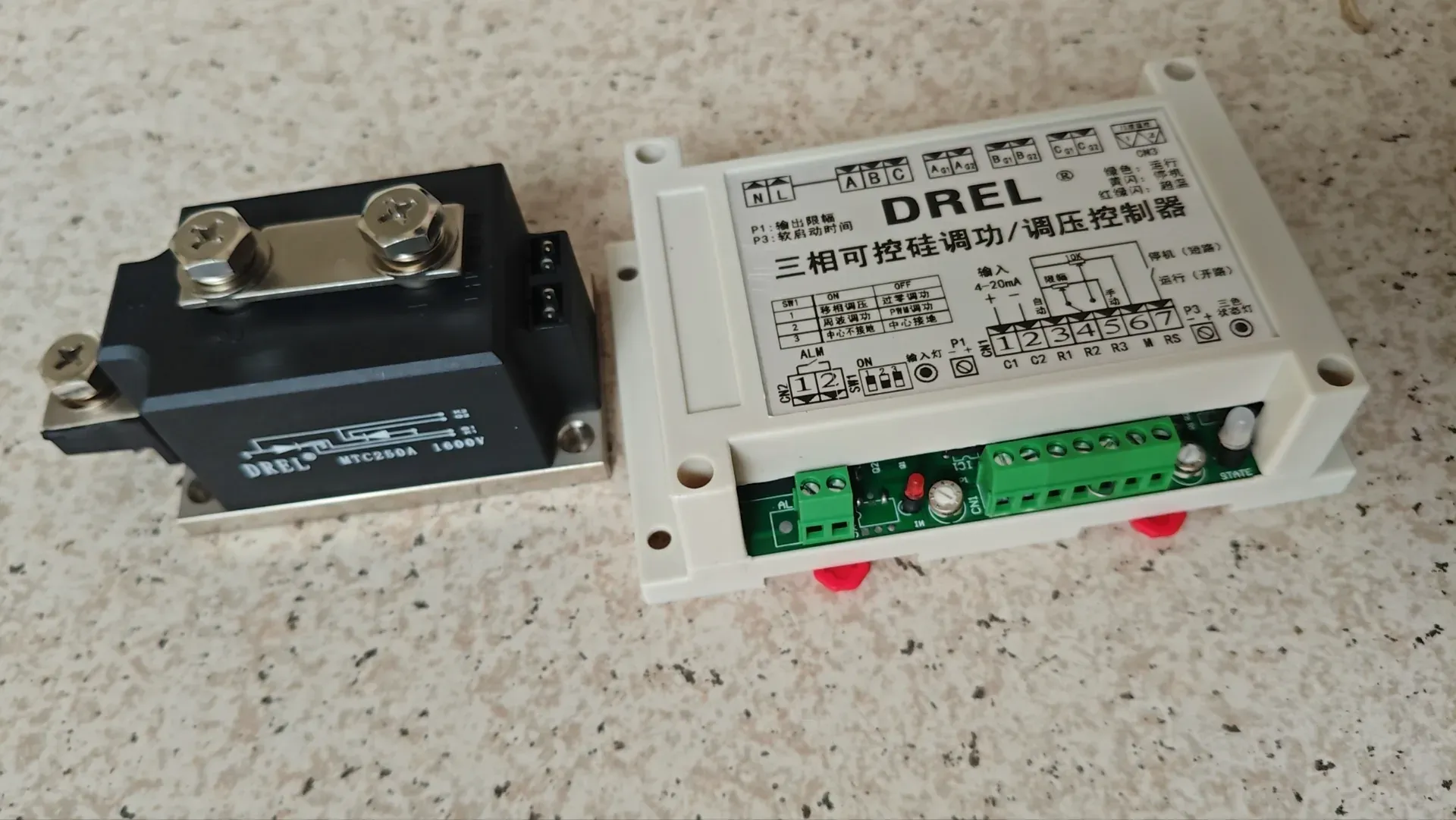
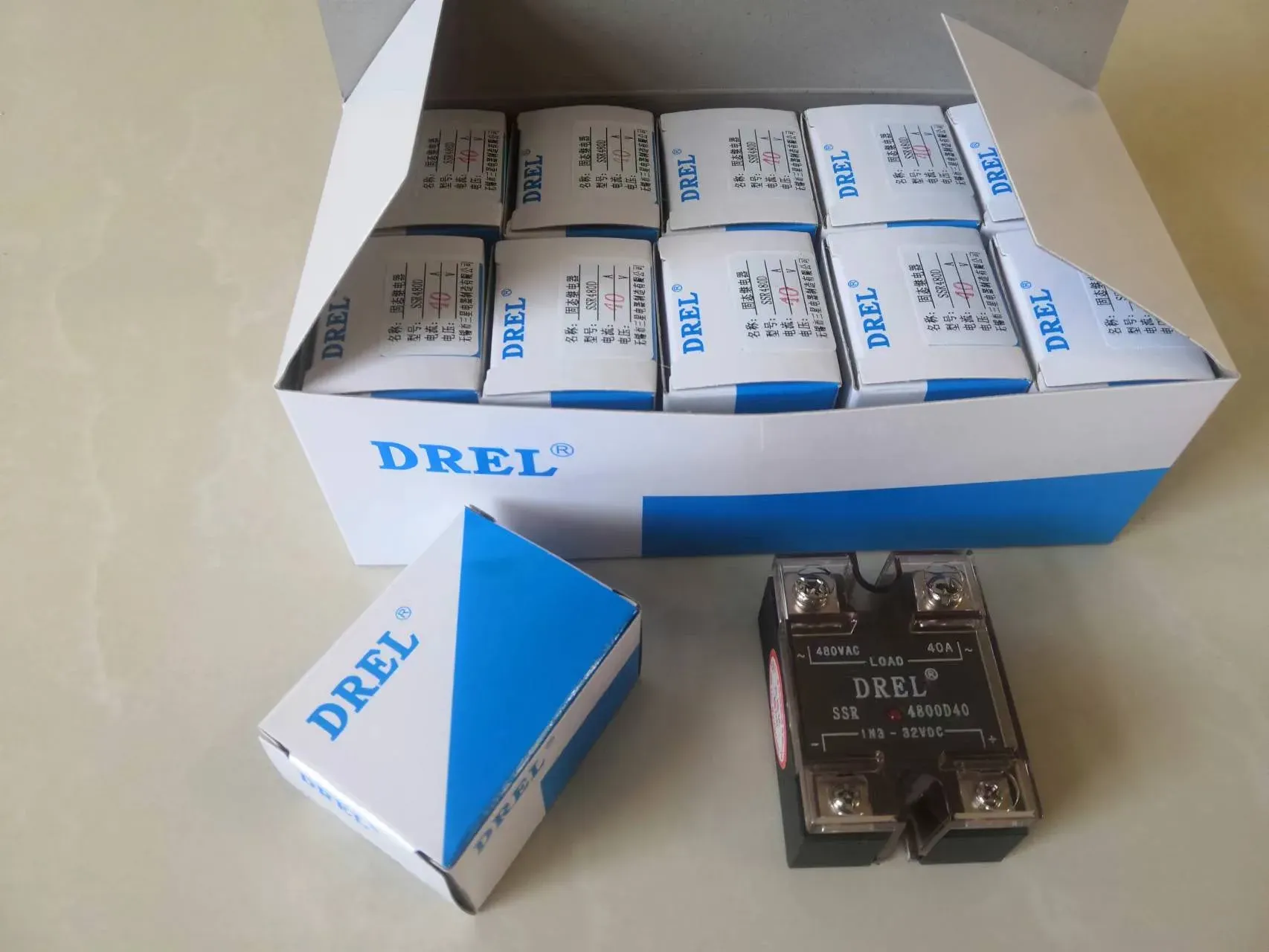
This guide compares the two devices the way a purchasing engineer should: working principle first, then application fit, then the checks to complete before ordering. Ratings quoted here come from the DREL SSR480D 40 A single-phase SSR and the MTC250A/1600V SCR module with its three-phase controller.
The Essential Difference: An Electronic Switch versus a Power Regulator
A solid state relay is a contactless electronic switch. A weak DC control signal, electrically isolated from the load side, switches a strong AC circuit on and off with no moving parts and no sparks. It is built for frequent start-stop duty and the constant on-off cycling of temperature control. The DREL SSR480D single-phase SSR, for example, accepts a 3-32 VDC control input and switches a 40-480 VAC load at a rated current of 40 A in a zero-crossing type design.
An SCR (thyristor) module is a power regulating device. In addition to switching, it varies output voltage and power steplessly and can rectify. The DREL MTC system pairs an MTC250A/1600V SCR module with a three-phase power and voltage controller: the controller reads a 4-20 mA signal from a temperature instrument or PLC and fires the thyristors at a controlled conducting angle, so the voltage and power delivered to the heater follow that signal.
Choose an SSR When the Load Is Switched, Not Regulated
SSRs fit processes where the controller cycles the heater on and off. The classic case is heating control with a PID temperature instrument: the SSR switches heating wires and heater elements in injection molding machines, ovens and industrial furnaces. Its 3-32 VDC input connects directly to a PLC output, so a micro-power control signal drives a high-power AC load without an intermediate contactor.
The spark-free construction also decides where the device can live. With no mechanical contacts, an SSR is safer than a conventional relay in chemical, coal-mine and other locations that require explosion protection, and it copes better with damp or corrosive sites. Two boundaries apply: the 40 A rating is meant to be derated in real use, and inductive loads such as small motors should have an RC snubber or varistor across the output to absorb surges.
Buyer tip: plan the heatsink before you place the order. At 40 A the device generates substantial heat and must be mounted on a metal heatsink with thermal grease applied, otherwise it will burn out regardless of the datasheet.
Choose an SCR Module When Power Must Be Adjusted Continuously
SCR systems take over where switching alone is not enough. The DREL MTC controller offers two working modes set by its SW1 switch. Phase-shift voltage regulation changes the conducting angle of each AC half-wave and gives a smooth output for applications that demand precise temperature control. Zero-crossing power regulation instead adjusts the ratio of conducting cycles within a set period, interferes less with the power grid, and suits heating loads with large thermal inertia.
The ratings of this class demand planning. The MTC module is rated 250 A and 1600 V, with 2500 V AC insulation between chip and baseplate and a nickel-plated copper baseplate for heat transfer and corrosion resistance. At this current level forced-air cooling is mandatory; natural convection is not enough. Typical duties include salt-bath, quenching, annealing and sintering furnaces, tunnel kilns, injection molding barrel heating, extrusion and packaging machinery, glass melting furnaces and pipeline heating, plus soft-start control for large fans and pumps.
Buyer tip: confirm the signal loop before wiring. The MTC controller expects a 4-20 mA input from the temperature instrument or PLC; a mismatched signal can cause inaccurate power regulation or failure to start.
How to Decide: Four Checks Before Ordering
Run through four questions. First, what output shape does the process need: full on-off cycling points to an SSR, continuous adjustment points to an SCR module. Second, what signal will drive the device: a discrete 3-32 VDC output from a PLC or thermostat suits an SSR, while an analog 4-20 mA loop suits the MTC controller. Third, what do the load ratings require: compare load voltage and current against device ratings such as 40 A on the SSR480D or 250 A and 1600 V on the MTC, then derate. Fourth, where will it work: in dusty, damp or corrosive sites, the spark-free SSR construction is the safer starting point.
Buyer tip: put cooling on the same checklist as the electrical ratings. Both device classes need a heatsink with thermal grease, and a perfect electrical match still fails when the thermal design is missing.
Match the Device to the Load, Then Confirm the Details
To summarize: an SSR is the isolation switch for frequent on-off heating control, and an SCR module is the regulator for continuous voltage and power adjustment from a 4-20 mA signal. Once you can state your load voltage, load current, control signal and installation environment, the choice is usually obvious. Contact us for model selection and quotations.